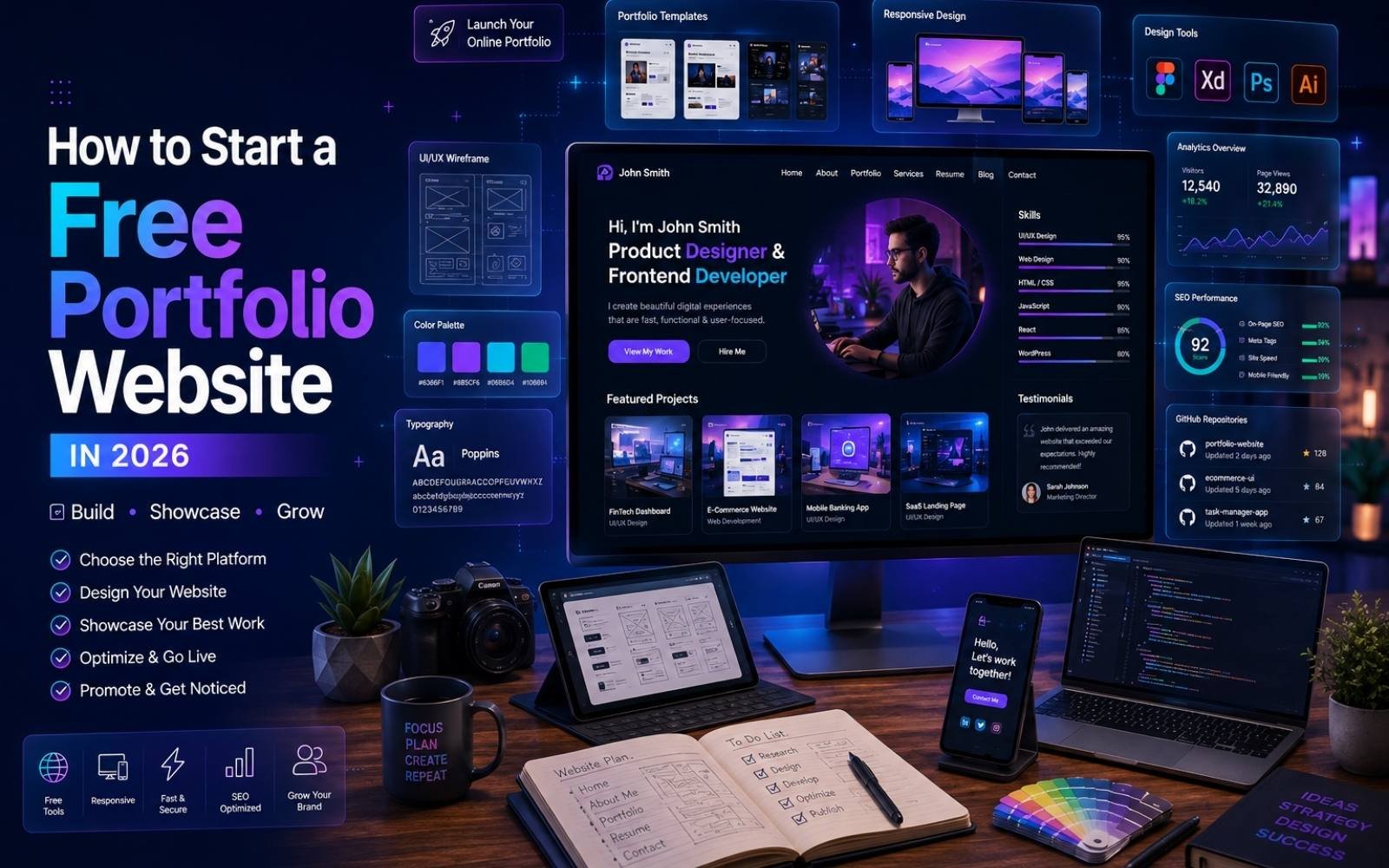
In today’s digital world, having an online portfolio is one of the most effective ways to showcase your skills, experience, and accomplishments. Whether you’re a web designer, developer, photographer, marketer, writer, or creative professional, a portfolio website serves as your digital resume, allowing potential employers and clients to view your work anytime and from anywhere. The uploaded source explains that online portfolios provide an easy-to-access platform for displaying your work and can help create opportunities with employers and clients.
The good news is that you don’t need a large budget or advanced coding skills to get started. Many website builders offer free plans, professionally designed templates, and drag-and-drop editors that make creating a portfolio simple.
This guide walks you through everything you need to know about building a professional portfolio website for free.
What Is a Portfolio Website?
A portfolio website is an online collection of your best work, achievements, and professional background. According to the source, it highlights your skills, work samples, project history, qualifications, and résumé, and can take the form of a website, blog, or even a video channel.
Unlike a traditional résumé, a portfolio allows visitors to see real examples of your work and better understand your abilities.
A strong portfolio can include:
- Featured projects
- Resume or CV
- Professional biography
- Certifications
- Skills
- Client testimonials
- Awards
- Contact information
Why You Need a Portfolio Website
A professional portfolio offers several advantages.
Showcase Your Best Work
Instead of simply listing skills, you can demonstrate them through real projects and case studies.
Build Your Personal Brand
A portfolio helps establish your online identity and communicates your expertise and style.
Increase Career Opportunities
Employers and clients often review portfolios before making hiring decisions. Having one makes it easier for them to evaluate your experience. The source specifically notes that portfolios can help attract employers and clients.
Improve Your Online Presence
A searchable portfolio makes it easier for people to discover your work through search engines and shared links.
Step 1: Define Your Portfolio Goals
Before choosing a platform or uploading projects, determine the purpose of your portfolio.
The source recommends asking yourself questions such as:
- What is my goal?
- How do I want visitors to perceive my work?
- How can I highlight my best work?
Your answers will influence the design, content, and structure of your website.
Step 2: Choose the Right Portfolio Builder
If you don’t want to build a website from scratch, a portfolio website builder is the easiest option.
According to the uploaded article, you should compare builders based on:
- Ease of use
- Template availability
- Customization options
- Social sharing features
- Affordability
- Customer support
- SEO features
Popular options discussed later in the source include Squarespace, Wix, UXfolio, Site123, Pixpa, Behance, Adobe Portfolio, Journo Portfolio, Crevado, and Dribbble, each suited to different creative professions.
Step 3: Choose a Professional Template
Your template determines how your portfolio is presented.
The source recommends selecting a template that:
- Matches your personality
- Highlights your work effectively
- Is easy to navigate
- Draws inspiration from successful portfolios in your industry
A clean, modern design keeps the focus on your work rather than distracting visitors.
Step 4: Showcase Your Best Work
Your portfolio should emphasize quality over quantity.
According to the source, place your strongest projects near the top so visitors see them first, and choose work that reflects the type of opportunities you want to attract.
Each project should ideally include:
- Project title
- Project overview
- Your role
- Tools used
- Challenges
- Solutions
- Results
- Images or screenshots
(Only the recommendation to highlight your best work and align samples with your future goals comes directly from the source; the project breakdown above is a suggested enhancement.)
Step 5: Include the Essential Pages
A professional portfolio website should be easy to navigate and provide visitors with all the information they need to understand your skills and experience.
According to the uploaded source, your portfolio can include the following sections:
Home
Your homepage should immediately communicate who you are and what you do.
Include:
- Professional headline
- Short introduction
- Call-to-action
- Featured projects
- Professional photo
About Me
Tell your story.
Include:
- Professional background
- Career journey
- Areas of expertise
- Personal mission
- Interests
Adding a personal touch helps visitors connect with you.
Portfolio / Projects
This is the most important page.
Display your best work with:
- High-quality screenshots
- Project descriptions
- Technologies used
- Challenges solved
- Results achieved
Organize projects into categories if you work across multiple disciplines.
Skills
Highlight both technical and soft skills.
Examples include:
Technical Skills
- HTML
- CSS
- JavaScript
- React
- WordPress
- UI Design
- UX Design
- Figma
- Adobe Photoshop
Professional Skills
- Communication
- Problem Solving
- Leadership
- Team Collaboration
- Project Management
Resume
Provide visitors with a downloadable résumé or CV.
Many employers appreciate having quick access to your professional history.
Testimonials
If you’ve worked with clients or employers, showcase positive reviews to build trust and credibility.
Contact Page
Make it easy for people to reach you.
Include:
- Email address
- Contact form
- LinkedIn profile
- GitHub
- Social media
- Location (optional)
Step 6: Publish Your Website
Once your portfolio is complete, it needs to be accessible online.
The uploaded article explains that website hosting makes your site discoverable on the internet and notes that some website builders include hosting, while others may require separate hosting providers. Examples mentioned include Hostinger, ScalaHosting, and A2 Hosting.
If you are using an all-in-one website builder, publishing your site is often as simple as clicking a Publish button.
Step 7: Promote Your Portfolio
Creating your portfolio is only the first step. You also need to make sure people can find it.
The source recommends promoting your portfolio by:
- Sharing it on social media
- Sending it via email
- Improving its search engine optimization (SEO)
- Creating multiple portfolios if you showcase different skill sets
- Including client testimonials to strengthen credibility
Additional ways to increase visibility include:
- Adding your portfolio to your LinkedIn profile
- Including it in your email signature
- Sharing project updates on social media
- Publishing helpful blog content
Best Portfolio Website Builders
The uploaded article compares several popular platforms designed for different creative professionals.
| Platform | Best For | Highlights |
|---|---|---|
| Squarespace | Photographers | Artistic templates, unlimited photo storage on basic plan, drag-and-drop editor |
| Wix | Designers & Professionals | Beginner-friendly, 800+ templates, social media integrations |
| UXfolio | UX/UI Designers | Case studies, prototype embedding, UX feedback |
| Site123 | Videographers | Video support, 10 GB storage, YouTube & Vimeo integration |
| Pixpa | Artists | Sell artwork, blogging, e-commerce features |
| Behance | Designers & Artists | Community feedback and project showcases |
| Adobe Portfolio | Creative Cloud Users | Integrates with Behance and Lightroom |
| Journo Portfolio | Writers | Import articles using URLs and mobile-friendly layouts |
| Crevado | Photographers & Illustrators | Supports images, audio, and video uploads |
| Dribbble | UX/UI Designers | Showcase design work and discover freelance opportunities |
Portfolio Design Best Practices
A professional portfolio should look clean, modern, and easy to navigate.
Keep It Simple
Avoid clutter and unnecessary animations that distract from your work.
Use High-Quality Images
Display professional screenshots, mockups, or photography to showcase your projects effectively.
Make It Mobile-Friendly
Ensure your portfolio works well on desktops, tablets, and smartphones.
Ensure your portfolio works well on desktops, tablets, and smartphones.
Maintain Consistent Branding
Use consistent:
- Colors
- Typography
- Icons
- Buttons
- Layouts
to create a polished and memorable experience.
Optimize Loading Speed
Compress images and avoid unnecessary scripts to keep your website fast.
SEO Tips for Portfolio Websites
A portfolio website can also attract visitors through search engines.
To improve your visibility:
- Use descriptive page titles
- Write compelling meta descriptions
- Optimize images with ALT text
- Use meaningful headings (H1–H3)
- Publish project case studies
- Add internal links
- Create a custom domain when possible
- Keep your content updated
The uploaded source also recommends considering SEO features when selecting a website builder and using SEO to promote your portfolio.
Common Portfolio Mistakes to Avoid
Avoid these common issues:
- Including too many projects instead of your best work
- Using poor-quality images
- Providing little or no project context
- Not updating your portfolio regularly
- Ignoring mobile responsiveness
- Missing contact information
- Slow-loading pages
- Inconsistent branding
- Spelling and grammar errors
- Failing to include a clear call to action
Final Thoughts
A professional portfolio website is one of the most valuable investments you can make in your career. It showcases your skills, demonstrates your experience, and gives potential employers and clients an easy way to evaluate your work.
As the uploaded article explains, creating a portfolio starts with defining your goals, selecting the right tools, choosing an appropriate template, highlighting your strongest work, publishing your site, and promoting it effectively.
Remember that your portfolio should evolve alongside your career. Regularly update it with new projects, certifications, testimonials, and achievements so it continues to reflect your current skills and professional growth.
Frequently Asked Questions (FAQs)
A portfolio website is an online collection of your work, skills, qualifications, and achievements that helps showcase your abilities to employers or clients.
Yes. The source discusses several platforms that offer free plans or free portfolio features, although some have limitations.
The source describes Wix as beginner-friendly with a large selection of templates.
The source recommends including work samples, a biography, skills, education, certifications, a résumé, accomplishments, and testimonials.
The source advises highlighting your strongest work first rather than overwhelming visitors with every project.
Not necessarily. The source explains that many website builders provide templates and editing tools that don’t require coding.
Focus on quality work, clear project descriptions, consistent branding, and an easy-to-use design.
Share it on social media, send it via email, optimize it for search engines, and include client testimonials where appropriate.
A custom domain can enhance professionalism, although the uploaded source does not specifically discuss purchasing one.
Update it regularly with new projects, certifications, skills, and achievements to keep it current.